Table of Contents
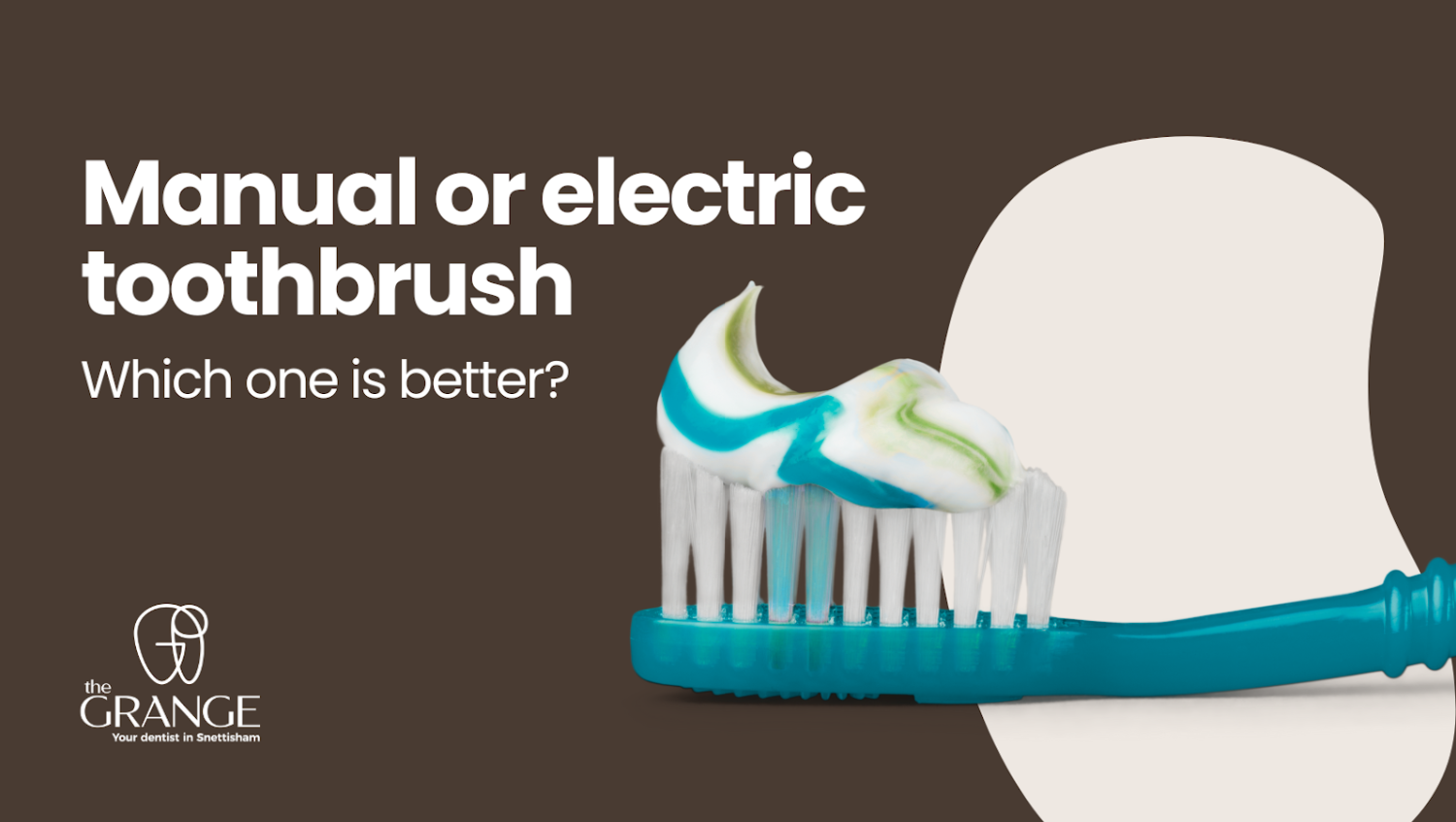
Your choice of toothbrush can significantly impact your oral health. With the market flooded with options, the debate between manual and electric toothbrushes continues. Let’s delve deeper to help you understand better.
The History of the Toothbrush:
The evolution of the toothbrush spans thousands of years. Early forms date back to ancient civilizations, where people used twigs or chew sticks to clean their teeth. The first recognizable toothbrush with bristles appeared in China during the Tang Dynasty (619-907 AD). These bristles were typically made from animal hair, such as boar bristles, attached to bamboo or bone handles.
Over time, toothbrush design evolved across different cultures, with materials ranging from hog bristles to horsehair and handles made from ivory or wood.
The modern nylon bristle toothbrush, similar to what we use today, was developed in the late 1930s, revolutionising oral hygiene practices worldwide.
Manual or Electric Toothbrush: Differences:
Manual toothbrushes have been the staple choice for generations, valued for their simplicity and affordability. They require manual skills and proper brushing technique for effective cleaning. In contrast, electric toothbrushes feature automated bristle movement, potentially offering more efficient plaque removal.
When is the Electric Toothbrush Appropriate?
If you suffer from sensitive gums, an electric toothbrush may be too aggressive. In this case, it’s better to opt for a softer manual toothbrush. Even without gum problems, it’s important to choose an appropriate brush head for your electric toothbrush to avoid gum damage and proper cleaning.
Another scenario where the use of an electric toothbrush is discouraged is after undergoing dental surgery. In this case, to maintain good oral hygiene during the recovery phase, it’s necessary to use a softer toothbrush.
Electric Toothbrush: Advantages and Considerations:
The electric toothbrush’s oscillating or vibrating motion can provide a more consistent and thorough cleaning action compared to manual brushing. This can be especially beneficial for reaching difficult-to-access areas, such as behind molars or along the gumline. Moreover, many electric toothbrushes come with built-in timers and pressure sensors, promoting optimal brushing habits. However, they require regular charging or battery replacement and may be bulkier for travel.
Manual Toothbrush: Pros and Cons:
Manual toothbrushes offer simplicity and affordability, requiring no additional power source or maintenance. With proper brushing technique, they can effectively clean teeth and gums. However, achieving consistent pressure and motion with a manual toothbrush may be challenging for some, potentially leading to inadequate plaque removal or gum irritation.
So, which is better: electric toothbrush or manual?
Determining the superior option between electric and manual toothbrushes isn’t straightforward. Each has its strengths and limitations, and the optimal choice depends on individual factors. Consulting with a dentist can help tailor the decision to your specific oral health needs and lifestyle preferences.
Ultimately, whether you opt for the precision of an electric toothbrush or the simplicity of a manual one, prioritising consistent and thorough brushing techniques remains paramount for maintaining optimal oral hygiene.